
AI Money Foresight 2026-06-18 09:21

Apple Raises Prices Again: Chips Too Expensive, I Pay

SummaryApple announced it will raise product prices due to soaring memory and storage chip prices. Cook said he is ready to use cash reserves to secure more memory supply. This article analyzes the impact of memory cyclical fluctuations on Apple's costs.

Illustration

Apple Raising Prices Again? This Time the Reason Is 'Chips Too Expensive, I Pay'

Hey, did you hear? Apple is preparing to raise prices again.

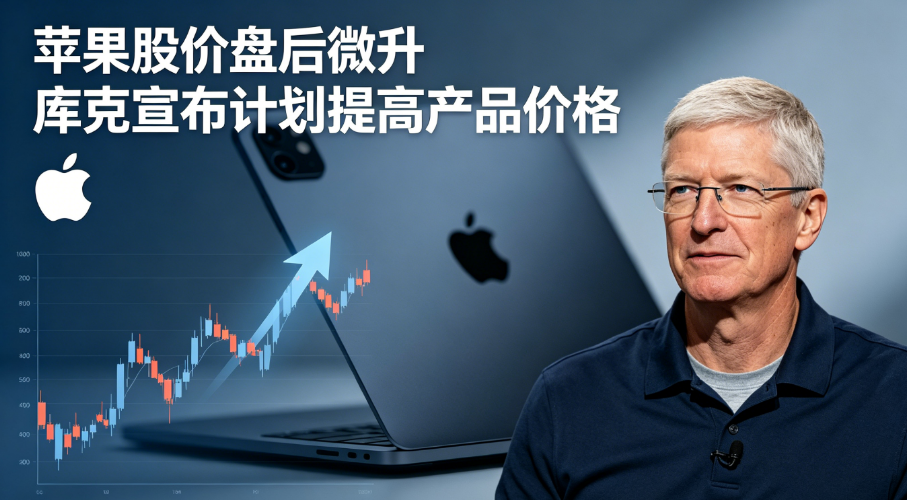
Just yesterday, Apple's stock price quietly rose 0.5% after hours. It doesn't seem like a big deal, but the story behind it is quite interesting—this global profit-making company officially announced it would raise product prices due to 'memory and storage chips being too expensive.' And even more dramatic, Cook added: 'We are ready to use cash reserves to secure more memory supply.'

Hmm? Raising prices while splashing cash to stock up? That's an interesting move.

Memory Storm: Not the First, Not the Last

First, let's talk about what this 'memory price storm' is all about.

If you've been following the electronics industry in recent years, you're probably familiar with the term 'memory cycle.' Memory and storage chips—like the RAM and SSD in your phone—have always been volatile, like an emotionally unstable artist: prices skyrocket when demand surges and crash when capacity is excessive to the point of making you question life. Over the past two years, with AI servers and data centers scrambling for supply, plus Samsung, SK Hynix, and Micron being relatively conservative in expanding production, memory prices have been rising and are still hovering at high levels.

For Apple, this is a headache. Think about it: the memory and storage chips in an iPhone Pro Max can account for 10% to 15% or more of the total cost. If the prices of these components double, Apple's profits will be severely eaten into. And Apple, known for its ultra-high margins, can't tolerate that.

So Cook chose the most direct way: raise prices.

'Raise Prices, Then What?'

When you hear 'price hike,' you might think: 'Here we go again, Apple always uses the same excuse.' But this time it's a bit different—Apple isn't just passively passing on costs; it's taking the initiative.

Cook's words in the interview are quite meaningful: 'We are ready to use cash reserves to increase memory supply.' In other words, Apple isn't going to wait for suppliers to lower prices; it plans to use its own 'money power' to lock in future supply. You read that right—Apple's over $200 billion cash reserve is finally being used to 'buy goods.'

This move isn't new. Tesla previously, due to chip shortages, signed long-term contracts with suppliers and even bought equipment for them to produce. Apple's approach is essentially the same—using money to secure supply. Only Apple's cash reserve is several times larger than Tesla's, so when it makes a move, it's a big one.

You can imagine the scene: Cook calls Samsung: 'Hey, I'll take all your memory next quarter.' Samsung: 'But there are other customers...' Cook: 'I'll add 20%.' Samsung: 'Deal.'

That's the power of capital.

But Will Consumers Pay?

Okay, the story sounds impressive, but we ordinary consumers only care about one thing: How much more do I have to pay?

Based on Apple's history of price hikes, each increase triggers a wave of 'too expensive, not buying' but sales often hit new highs. Why? Because Apple's product ecosystem lock-in is too strong—your apps, iCloud, AirPods, Apple Watch are all connected, making switching to Android too costly. Plus, Apple's brand premium means many would rather pay more than change systems.

Moreover, this price hike is likely not across the board. I boldly guess the increase will mainly be on high-end models like iPhone Pro Max and MacBook Pro—products that are already expensive. Regular iPhones and MacBook Air may see limited or no increase. The reason is simple: Apple knows the base models are for volume, while high-end models are the profit center. Let those who can afford high-end pay a bit more to subsidize memory costs—Apple does this smoothly.

Also, Apple can 'implicitly raise prices' by adjusting storage configurations. For example, switching a base model from 128GB to 256GB start but only slightly increasing the price makes consumers feel 'more capacity, seems like a deal' while Apple's profits are higher. Cook is likely proficient in this maneuver even with eyes closed.

What Are the Risks?

Of course, no strategy is perfect. Apple's biggest risk this time is the overall consumer electronics market environment.

We are in an era of global inflation, high interest rates, and shrinking consumer wallets. Although high-end user loyalty is strong, if the economy continues to worsen, even the wealthy will start to tighten their belts. At that point, an iPhone costing six or seven hundred thousand Taiwanese dollars may not sell as well.

Also, memory prices don't always rise. Historical experience tells us memory cycles typically last one to two years, then crash due to overcapacity. If Apple locks in a large inventory at high prices now and memory prices crash next year, Apple will become the 'bag holder,' holding a pile of expensive chips with costs higher than competitors. Then the stock price won't rise 0.5% but fall 5%.

However, given Apple's supply chain management ability, it likely has risk mitigation mechanisms. For instance, signing clauses with suppliers to guarantee supply during price rises and allow price adjustments during falls, or hedging via futures contracts. Cook is an expert in these financial operations—don't forget he was previously in charge of supply chain.

Conclusion: Price Hike Is a Means, and a Posture

Ultimately, Apple's price hike is ostensibly to reflect costs, but deep down it's a market statement: 'I have money, I have confidence, I call the shots.'

In the past few years, Apple's pricing strategy has evolved from 'reasonable premium' to 'extreme premium.' The price of one iPhone can buy several Android flagships, yet Apple still sells like crazy. The logic behind this is no longer purely product power, but brand, ecosystem, service, and the trust that 'you don't have to worry about me going bankrupt.'

And Cook's move to use cash reserves to grab memory further pushes this trust to the extreme. Consumers will think: 'Apple is so rich, it even dares to stockpile chips, so my data on iCloud should be safe'—although the two are unrelated, psychological suggestion is magical.

In the future, we'll likely see more Apple price increase news. But instead of complaining 'it's more expensive,' think: Can you get enough value from Apple's ecosystem? If yes, the price increase may just be the cost of one extra fancy meal per year; if no, maybe it's a good time to consider switching to another camp.

After all, the market is always free, and Apple's 'money power,' no matter how strong, can't force you to pay. Unless you're already inseparable from that bitten apple.

Detail Page Advertisement
Article Details
Weibo