
AI Money Foresight 2026-07-28 10:52

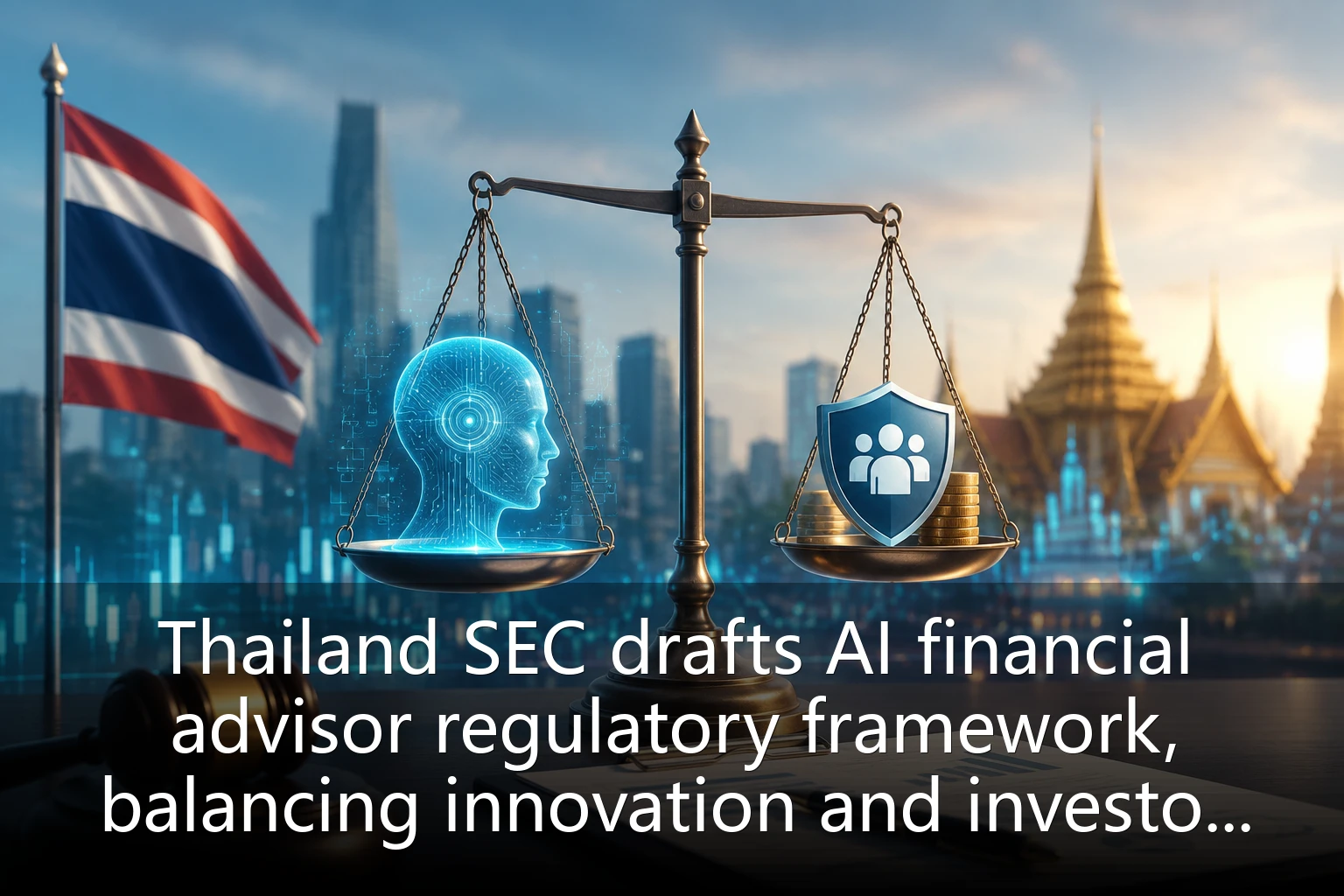
Thailand SEC drafts AI financial advisor regulatory framework, balancing innovation and investor protection

SummaryOn July 28, 2026, Thailand's SEC announced a draft regulatory framework for AI investment advisors, to be implemented by year-end. New rules require algorithm transparency, periodic audits, and customer complaint mechanisms to protect investors while fostering innovation. This article analyzes regulatory highlights, market impact, and investor considerations.

On July 28, 2026, Thailand's Securities and Exchange Commission (SEC) officially announced that it will draft a regulatory framework for AI investment advisors, expected to be completed and implemented by year-end. This move aims to address the growing popularity of AI financial services, balancing financial innovation and investor protection, especially as AI-driven investment advisory tools attract a large number of retail investors amid Thailand's rapid digital economy development.

Regulatory Background: Rise of AI Financial Advisors in Southeast Asia

In recent years, AI financial advisors have expanded rapidly in Thailand and the Southeast Asian market. From Singapore's robo-advisor platforms such as StashAway and Syfe to local Thai startups like Finnomena and Jitta, AI technology is redefining the personal investment experience. These services typically rely on machine learning models to automatically allocate assets based on user risk preferences and financial goals, while providing real-time market predictions. However, accompanying issues such as algorithm bias, data privacy, and liability attribution have also drawn regulatory attention.

Thailand SEC Secretary-General Ruenvadee Suwanmongkol stated in the announcement: "AI investment advisors have the potential to significantly lower the barrier to financial planning, but we must ensure these tools do not mislead investors or trigger systemic risks. The new framework will focus on transparency, fairness, and accountability."

Regulatory Highlights: Transparency, Audits, and Investor Protection

According to the draft, Thailand SEC proposes three core regulatory directions:

  • Algorithm Transparency: AI advisors must disclose their model's core logic, training data sources, and risk parameters to regulators, and explain the basis of recommendations to investors in easy-to-understand language. For the black box problem in machine learning, providers must submit model interpretability reports.
  • Periodic Audits and Stress Tests: AI advisors must undergo regular independent third-party audits to test model performance under extreme market conditions, such as stock market flash crashes or sudden interest rate changes. If the model deviates from expectations, immediate corrections and user notifications are required.
  • Customer Complaints and Compensation Mechanism: Platforms must establish a 24-hour complaint channel and set aside a certain percentage of risk reserve funds to compensate for investment losses caused by algorithm errors. Additionally, the SEC will create an online dispute resolution platform to accelerate dispute handling.

Industry Interpretation: Impact on Thailand's Fintech Ecosystem

Thailand's move is seen as a pioneer in AI financial regulatory oversight in Southeast Asia. Compared to the Monetary Authority of Singapore (MAS), which earlier this year approved the first fully AI-powered financial advisor service (limited to institutional clients), Thailand SEC's framework places greater emphasis on retail investor protection with more specific requirements. Industry reactions are mixed: some startups worry about rising compliance costs that could stifle innovation, but most large financial institutions and multinational platforms welcome it, believing clear rules will build consumer trust and attract more capital inflow in the long run.

Bangkok-based independent financial advisor firm "MoneyGuru" CEO Chatchai Limpamont said: "Regulation should not be a barrier but a catalyst. When investors know there is regulatory oversight behind AI, they are more willing to try automated financial planning, which in turn expands the market."

Comparison with Singapore MAS

Notably, Singapore MAS's earlier approved "first fully AI-powered financial advisor service" mainly targets high-net-worth clients and requires AI systems to have complete autonomous decision-making capabilities. In contrast, Thailand's plan requires some human oversight, e.g., AI recommendations must be reviewed by licensed advisors before execution. This reflects different regulatory philosophies on AI autonomy: Singapore tends to empower innovation, while Thailand focuses more on risk prevention.

For multinational robo-advisor platforms like StashAway, Thailand's new rules may mean adjusting local service models to comply with algorithm disclosure and audit requirements. However, StashAway's regional compliance officer noted: "We have operated in Malaysia and Singapore for years, accumulating extensive regulatory communication experience, and we are confident in adapting to Thailand's framework."

Investor Considerations: How to Identify Compliant AI Advisors

Under the new regulatory framework, Thai investors can consider the following when selecting AI financial advisors:

  • Check License and Registration Status: Only AI advisors registered with the SEC can legally provide services. Investors should first verify if the platform is on the SEC website's "Approved Fintech List."
  • Understand Algorithm Limitations: Even if AI performs well, it does not guarantee profits. Models are based on historical data and may not predict black swan events. Investors should carefully read the platform's "Algorithm Performance Statement" and "Risk Disclosure Document."
  • Use Complaint Mechanisms: If in doubt about AI recommendations, immediately file a complaint through the platform. SEC new rules mandate platform response within 48 hours; otherwise, report to regulators.

Future Outlook: Global Regulatory Trends for AI Financial Advisors

Thailand SEC's draft regulatory framework will be open for public consultation until the end of September 2026, followed by revisions and final release. Meanwhile, major global markets are actively developing similar rules: the U.S. Securities and Exchange Commission (SEC) is studying requirements for AI advisors to undergo "model interpretability" tests; the EU's Artificial Intelligence Act classifies financial investment advice as high-risk applications subject to strict compliance requirements.

Industry analysts believe that as AI financial advisor penetration increases, regulation will shift from "guidance" to "mandatory." As the third-largest economy in ASEAN, Thailand's regulatory direction will influence policy making in neighboring countries such as Indonesia and Vietnam. For multinational robo-advisor platforms, early adaptation to diverse regulatory environments will become a key competitive advantage.

In summary, Thailand SEC's new framework provides a clearer compliance path for the development of AI financial advisors and builds a protective net for investors. In the dynamic balance between regulation and innovation, the future of AI financial advisory is full of opportunities and challenges.

Detail Page Advertisement
Article Details
Weibo